
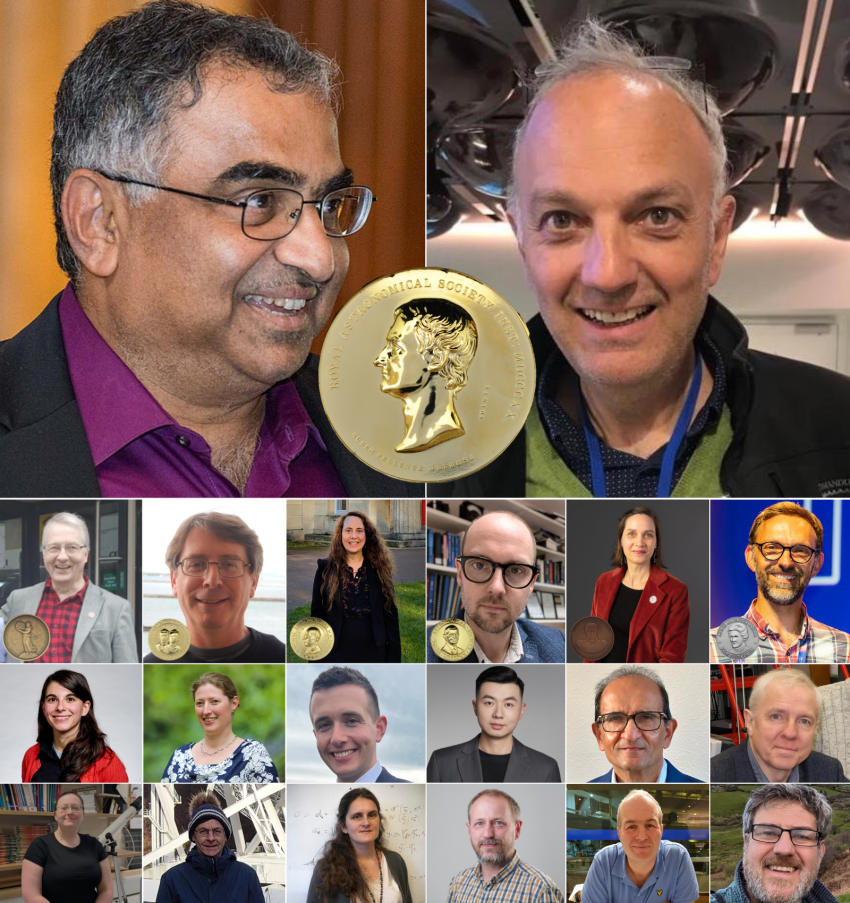

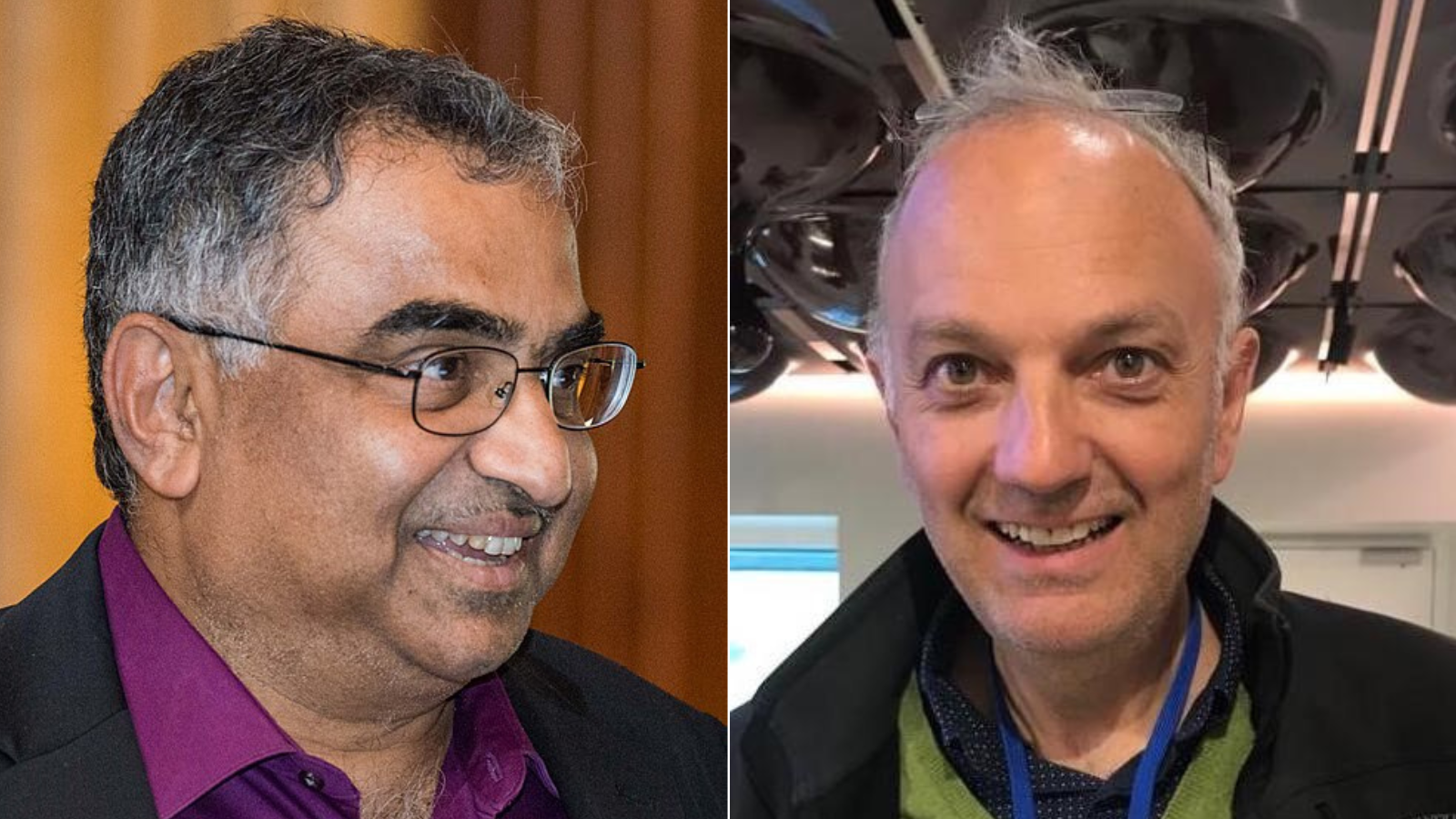
An astronomer who has made ground-breaking discoveries about millisecond pulsars, gamma-ray bursts and supernovae and an "exemplary" mathematical geophysicist specialising in Earth's magnetic field have each been awarded the Royal Astronomical Society's Gold Medal for 2026.
Professor Shrinivas Kulkarni, of the California Institute of Technology, earned the Gold Medal in Astronomy for his "field-defining" discoveries in time-domain astronomy and "sustained, innovative and ground-breaking contributions to multi-wavelength transient astrophysics".
The Gold Medal in Geophysics has been won by Professor Andrew Jackson, of ETH Zürich. His instrumental work in the field of geomagnetism led to the creation of a model which has been used by "virtually every study of the historical magnetic field of the last 20 years".
In receiving the Society's highest honour – which dates back 200 years – the pair join the likes of Stephen Hawking, Jocelyn Bell Burnell, Albert Einstein and Edwin Hubble.
"I'm immensely grateful to the RAS for the award of the Gold Medal," said Professor Jackson. "It has been a long passion of mine to attempt to understand the deep Earth, and it is rewarding to see its significance recognised by the RAS.
"I am privileged to have been able to work with so many young, talented collaborators along the way, without whom much of the work would not have been accomplished. I wish to thank the RAS for this great honour."
Professor Kulkarni, who also received the 2024 Shaw Prize in Astronomy, said: "I was very surprised to hear the news, especially given the stellar list of past winners.
"I would like to thank my long-term collaborators and the engineering crew and members of the Palomar Transient Factory and the Zwicky Transient Facility for their immense contribution to the projects."
He described this discovery of the first millisecond pulsar as "the most fun achievement in my life", adding: "I was a graduate student when I made the discovery. I could not sleep for several days!"
Each year the RAS recognises significant achievement in the fields of astronomy and geophysics through a number of awards, medals and prizes, encompassing different types of talent from research to education and outreach.
English mathematician Charles Babbage and German astronomer Johann Franz Encke were jointly handed the first RAS Gold Medal just over 200 years ago, in 1824.
Since 1964 two have been awarded each year: one for astronomy, and one for geophysics. The medal features an image of the 40-foot telescope constructed by Sir William Herschel, who was the first president of the RAS.
The award announcements were made at the Society’s A&G Highlights Meeting held on Friday 9 January 2026.
As well as the Gold Medals, the RAS also awards a variety of other medals, prizes, honorary fellowships and lectureships.
The 2026 Eddington Medal, which recognises investigations of outstanding merit in theoretical astrophysics, has been awarded to Professor Debora Šijački, of the University of Cambridge.
She said she was "profoundly honoured", adding: "It is a unique privilege to join the outstanding group of past awardees, many of whom have inspired me along my scientific journey.
"It is amazing that we have reached the point where we can recreate the mesmerising complexity of our universe on a supercomputer."
Professor Mathew Owens, of the University of Reading, received the Chapman Medal, which is awarded for investigations of outstanding merit in the science of the Sun, space and planetary environments or solar-terrestrial physics.
He said: "I'm really flattered, not least that someone would take time from their busy day to nominate me!
"Modern science is a collaborative effort, and I'm very fortunate to have such excellent collaborators. In particular Luke Barnard for his work with the HUXt solar wind model, which was singled out in the award citation."
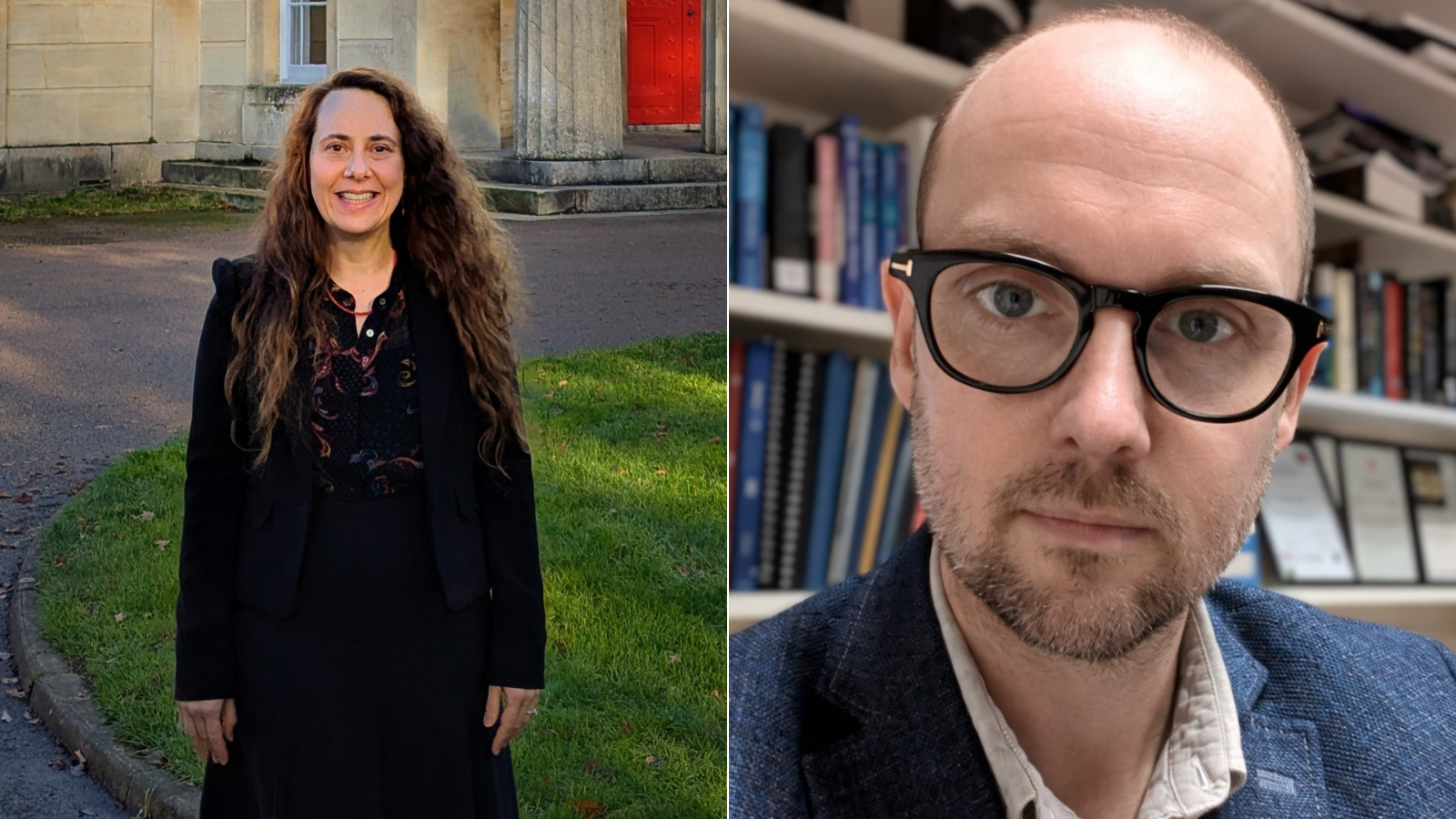
The 2026 Herschel Medal, which honours investigations of outstanding merit in observational astrophysics, was awarded to Professor Andrew Bunker, of the University of Oxford.
He called the accolade a "great honour", adding: "It has been a very exciting time to work on incredible data from the James Webb Space Telescope (JWST).
"With my colleagues on the JWST Deep Extragalactic survey (JADES) we have discovered some of the most distant galaxies yet.
"The near infrared spectrograph (NIRSpec) on JWST has revealed the chemistry of these early galaxies, and the rate at which stars are being born.
"The ability of NIRSpec to take a spectrum of many galaxies at once with great sensitivity has been revolutionary, and I warmly acknowledge the contributions of my fellow members of the NIRSpec Instrument Science Team."

The 2026 Jackson-Gwilt Medal, recognising outstanding invention, improvement, or development of astronomical or geophysical instrumentation or techniques, was awarded to Professor Alistair Glasse, of the UK Astronomy Technology Centre based at Royal Observatory, Edinburgh, while Professor Clemency Montelle, of the University of Canterbury, New Zealand, received the Agnes Mary Clerke Medal.
This is awarded every three years to an individual who has achieved outstanding personal research into the history of astronomy or geophysics.
"I am delighted and honoured to receive the Agnes Mary Clerke Medal," said Professor Montelle.
"It is especially meaningful to be recognised for work that explores the deep historical roots of astronomical knowledge across cultures, and for the collaborative work, mentorship and community-building that sustain the field and make this scholarship possible."
Professor Glasse said: "I am thrilled and very honoured to be recognised by the RAS for my contribution to infrared astronomical instrumentation.
"I continue to enjoy every day spent working with talented engineers and enthusiastic astronomers, in a field which inspires and energises all young scientists striving for a better future."
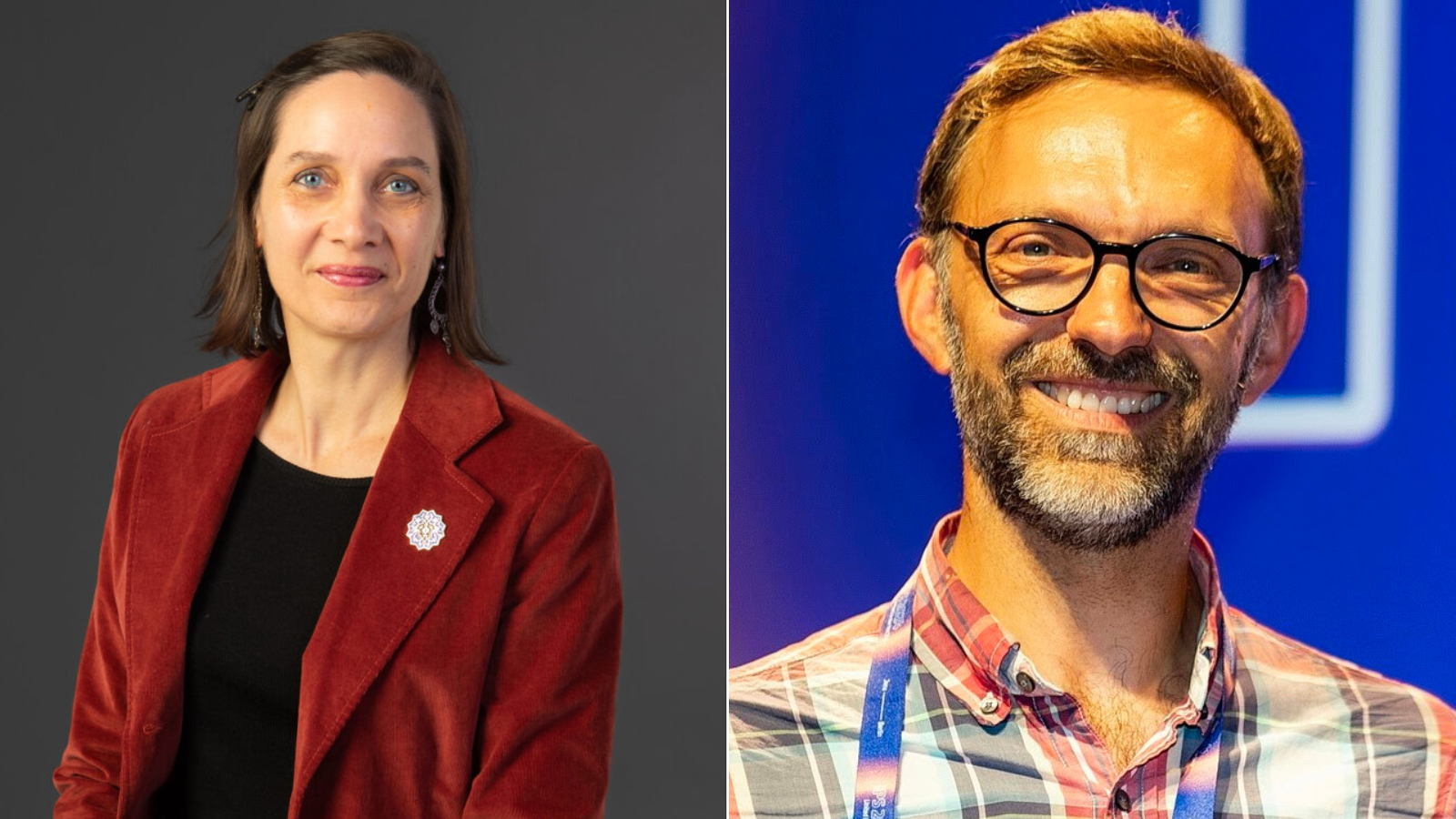
Dr Edward Gomez, of Cardiff University, received the Annie Maunder Medal – awarded for an outstanding contribution to outreach and public engagement for astronomy or geophysics.
He said: "We need a population who are skeptical of information given by the media, politicians and particularly AI. Having a scientifically literate society is important to everyone, so we can make good choices in life.
"Skepticism is fundamental to science, and astronomy is a fantastic way to inspire and excite people through amazing discoveries and beautiful pictures.
"I am so happy to have the work I have contributed to recognised by the RAS. It would not have been possible without the generous support of so many volunteers around the globe."
The awards panel said his work "exemplifies how innovative outreach, remarkable dedication over a long career, and empowering educators to do real science in the classroom can have a truly international impact".
Awards are designated 'A' for astronomy (including astrophysics and cosmology) and 'G' for geophysics (including solar physics, planetary science and solar-terrestrial physics). Full citations are linked as PDF files in the list below.
The full list of 2026 winners:
Gold Medal (A): Professor Shrinivas Kulkarni, California Institute of Technology
Gold Medal (G): Professor Andrew Jackson, ETH Zürich
Eddington Medal (A): Professor Debora Šijački, University of Cambridge
Chapman Medal (G): Professor Mathew Owens, University of Reading
Herschel Medal (A): Professor Andrew Bunker, University of Oxford
Jackson-Gwilt Medal (A): Professor Alistair Glasse, Royal Observatory, Edinburgh
Agnes Mary Clerke Medal: Professor Clemency Montelle, University of Canterbury, New Zealand
Fowler Award (A): Dr Ingrid Pelisoli, University of Warwick
Fowler Award (G): Professor Paula Koelemeijer, University of Oxford
Early Career Award (A): Dr Deaglan Bartlett, University of Oxford
Early Career Award (G): Dr Ke Zhu, University of Bristol
Ian Robson Lifetime Achievement Award (A): Professor Raman Prinja MBE, University College London
Service Award (G): Professor Mark Burchell, University of Kent
Secondary Education Award: Mrs Vicky Dean, The King's Academy
Higher Education Award: Dr Dirk Froebrich, University of Kent
Annie Maunder Medal: Dr Edward Gomez, Cardiff University
'Named' lectures to be delivered at a meeting of the Society:
George Darwin Lectureship: Professor Suzanne Aigrain, University of Oxford
James Dungey Lectureship: Professor Andrew Hillier, University of Exeter
Gerald Whitrow Lectureship: Professor Richard Battye, University of Manchester
Harold Jeffreys Lectureship: Professor Andy Biggin, University of Liverpool
Professor Mike Lockwood, President of the RAS and a past Gold Medal winner, said: "I want to give my warmest congratulations to all the award winners.
"My thanks go to those who serve on our awards panels and the RAS staff who help them – they have done a truly fantastic job – and it is a very difficult job indeed because all the nominations were very deserving cases.
"I also want to thank all who submitted nominations for bringing all candidates to the attention of the panels. Reading about the work of the winners was genuinely uplifting and a pure delight.
"There is so much achievement recognised by the awards and also so much effort to spark interest in potential young scientists and to promote astronomy and geophysics."
ENDS
Media contacts
Sam Tonkin
Royal Astronomical Society
Mob: +44 (0)7802 877700
Images & captions
Images of the award winners and medals are available on request.
Notes for editors
About the Royal Astronomical Society
The Royal Astronomical Society (RAS), founded in 1820, encourages and promotes the study of astronomy, solar-system science, geophysics and closely related branches of science.
The RAS organises scientific meetings, publishes international research and review journals, recognises outstanding achievements by the award of medals and prizes, maintains an extensive library, supports education through grants and outreach activities and represents UK astronomy nationally and internationally. Its more than 4,000 members (Fellows), a third based overseas, include scientific researchers in universities, observatories and laboratories as well as historians of astronomy and others.
The RAS accepts papers for its journals based on the principle of peer review, in which fellow experts on the editorial boards accept the paper as worth considering. The Society issues press releases based on a similar principle, but the organisations and scientists concerned have overall responsibility for their content.
Keep up with the RAS on Instagram, Bluesky, LinkedIn, Facebook and YouTube.
Download the RAS Supermassive podcast